
Hardscape Design Ideas: A Homeowner's Guide to Patios, Walls and Outdoor Living
Hardscape design is the part of your landscape that is built rather than planted: patios, walkways, driveways, steps, retaining walls, fire pits and the edges that hold it all together. Done well, it gives a yard structure, makes every season more usable and stays put through Illinois winters. Done poorly, it heaves, pools water and needs rebuilding. This guide walks through hardscape ideas, examples of what works, the materials to consider and how to plan a project from first sketch to final cleanup.
GoldLeaf Landscape | Hardscape is a family-owned company in Aurora, IL that designs and builds hardscapes across the western suburbs. Everything below reflects how we think about outdoor hardscape for homes in this region. If you want to see finished work first, browse our hardscape project examples.
What Is Hardscape, and How Is It Different From Softscape?
Hardscape means the hard, non-living elements of a landscape: pavers, natural stone, brick, concrete, gravel, boulders and the walls and structures built from them. Softscape is everything alive: lawn, trees, shrubs, perennials and mulch beds. A good landscape hardscape design treats the two as partners. Hardscape sets the bones and softscape softens them, so a paver patio feels like part of the yard instead of a slab dropped into it.
Thinking in layers helps. Hardscape handles circulation (where people walk), activity (where they sit, cook and gather) and grade (how the ground is shaped and drained). Softscape handles comfort (shade, privacy, color and texture). Planning both together, before anything is built, avoids the common mistake of choosing plants to fill leftover space.
Hardscape Design Principles That Make a Yard Work
Start with how you will use the space
List the activities first: dining for six, a quiet reading corner, a fire pit for cool evenings, a path that works with a stroller or wheelbarrow. Each activity needs a surface of a certain size. A table with chairs pulled out needs more room than most people expect, so mock the layout on the ground with chalk or hose before committing.
Plan circulation and sightlines
Paths should go where people already want to walk. A walkway that fights the natural route gets ignored and the lawn takes the damage. Consider what you will see from the kitchen window and the back door, and place focal points like a seat wall, planting bed or fire feature where they reward that view.
Scale and proportion
A patio that is too small feels cramped, and one that is too big feels empty and dominates the house. Match the size of hardscape to the size of the home and the lot, and repeat shapes and materials so the design reads as one idea.
Drainage comes first
Water is the main enemy of any hard surface. Every patio, walkway and wall needs a plan for where water goes, including the roof downspouts, the slope of the surface and the ground around it. Good drainage design is invisible when it works, which is why it is worth getting right before you pick patterns and colors.
Outdoor Hardscape Elements and Ideas
- Patios: the anchor of most outdoor living spaces. Shape, pattern and borders let a simple rectangle become something custom. See our patio and landscape design ideas for more.
- Walkways and entries: a front walk is the first thing visitors see, so material and width matter. Curved paths soften a formal home, straight paths suit a modern one.
- Driveways and aprons: pavers can add curb appeal and are repairable in sections, which is a real advantage when utilities need access.
- Retaining walls: solve slopes, create level terraces and hold planting beds. Taller or heavily loaded walls can require engineering, so treat them as structures, not decoration.
- Steps and landings: safe, even risers and treads matter more than style. Build them to match the surrounding material.
- Fire pits and gathering areas: a fire pit with seating extends the usable season and gives a patio a focal point. Keep clearances to the house and trees in mind.
- Seat walls and borders: low walls double as extra seating and define the edge of a space without a fence.
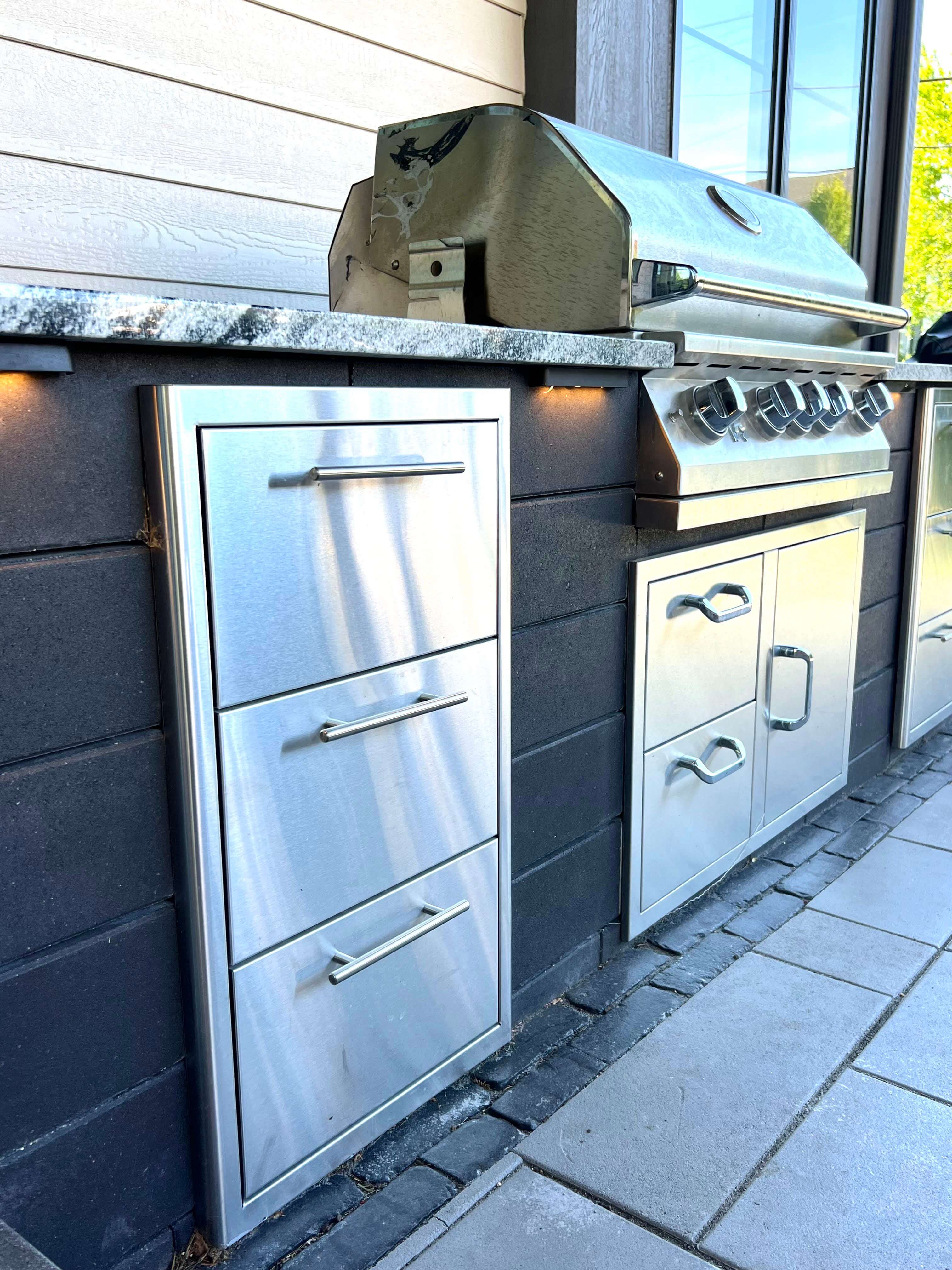
- Outdoor kitchens and grilling zones: need a durable, level surface and thought about utilities, safety and distance from the home.
For layouts built around a whole yard, see our companion guide to backyard hardscape ideas and design.
Hardscape Landscaping Ideas That Blend Hard and Soft
The most successful yards use hardscape to frame planting. Leave planting pockets along a patio edge so shrubs and grasses can spill onto the paving. Use a low retaining wall to turn a slope into stepped beds. Run a stone path through a perennial border so it feels discovered rather than imposed. Add groundcover or creeping plants between stepping stones where light foot traffic allows.
Choose plants suited to northern Illinois conditions and to the exposure at each spot. Our guide to how to design outdoor living spaces covers how to balance structure and planting across the whole property.
Modern Hardscape: Clean Lines and Simple Materials
Modern hardscape favors restraint. Think large-format pavers with tight joints, straight edges, a limited palette of two or three materials and little ornament. Level changes are handled with crisp seat walls or steps, and planting is simple and repeated, such as masses of ornamental grass. Neutral grays and charcoals work well with contemporary architecture, while warmer tones suit traditional homes. The key to making modern hardscape feel inviting rather than cold is texture and greenery, so keep softscape in the plan.
Hardscape Materials to Consider
Each material has a personality, and the right one depends on style, budget and how the surface will be used.
- Concrete pavers: the most versatile choice, available in many shapes, sizes and colors. They are installed over a compacted aggregate base, and individual pavers can be lifted and reset if the ground settles or utilities need work.
- Brick pavers: a classic look that suits older homes and traditional gardens. See our brick paving services.
- Natural stone: bluestone, limestone and similar stones give a one-of-a-kind look and age gracefully. Pieces vary in thickness, so installation takes skill.
- Poured concrete: economical and clean, but it cannot be repaired invisibly once it cracks.
- Segmental retaining wall block: engineered block systems for walls and seat walls.
- Gravel and crushed stone: good for informal paths and drainage areas, with a different maintenance profile than paving.
Ask any contractor which base and edge restraint they use and why. The industry's technical notes on paver installation, including CMHA PAV-TEC-002 and PAV-TEC-009 from the Concrete Masonry & Hardscapes Association, are a useful reference for what proper construction involves.
Designing Hardscape for Illinois Weather
Northern Illinois puts hardscape through freezing, thawing, heavy rain and deicing. Most hardscape failures trace back to the same few causes: a base that was too thin or poorly compacted, soil that was not prepared, water that was allowed to collect, or edges that were not restrained. These problems stay hidden for a season or two and then show up as sinking, rocking pavers or heaved sections.
That is why the unseen work matters most: excavating properly, building a compacted base, sloping the surface away from the house and installing edge restraint. When you compare quotes, compare the preparation, not just the surface material. For retaining walls, read the best practices published by The Masonry Society for segmental retaining walls, and remember that tall walls can require an engineer's design.
If your project is near mature trees, protect their roots during excavation. The University of Illinois Extension explains how to protect trees and their roots during construction projects.
Planning and Budgeting a Hardscape Project
A clear process keeps a project on track and on budget.
- Define goals: how you will use the space, who will use it and how often.
- Set a realistic budget range: cost depends on size, material, grade changes, access for equipment, drainage work and whether walls or steps are involved. Ask for an itemized estimate.
- Get utilities marked: call 811 at least a few days before digging. In Illinois this is handled by JULIE and is free.
- Check permit requirements: they vary by city or village and by project type, so confirm with your municipality before work starts.
- Consider phasing: build the core, such as grading, drainage and the main patio, first and add fire features, lighting or planting later.
- Plan for the finish: sealing, edging and planting should be part of the plan, not afterthoughts.
Hardscape Maintenance Through the Seasons
Hardscape is low-maintenance, not no-maintenance. In spring, sweep, check for settled areas and top up joint material if needed. In summer, keep surfaces clean and watch for weeds in joints. In fall, clear leaves so moisture does not sit on the surface and keep downspouts and drains clear. In winter, use deicers recommended for your paving material, because some products can damage certain surfaces, and avoid sharp metal blades on pavers. If you plan to seal, ask your installer which product suits your material and how often to reapply.
How to Hire a Hardscape Contractor
A good contractor makes the plan, the preparation and the finish all work together. Use this checklist, drawn from guidance by the National Association of Landscape Professionals in Hiring a Pro:
- Ask for proof of insurance and references from recent local jobs.
- Get a written, itemized estimate that names materials, scope, timeline and payment schedule.
- Ask what base, drainage and edge restraint are included and who handles permits.
- Make sure the warranty is in writing. GoldLeaf backs its work with a 5-year workmanship warranty.
- Read the Illinois Attorney General's home repair guidance so you know your rights under the Home Repair and Remodeling Act before signing a contract.
Frequently Asked Questions About Hardscape Design
What is hardscape design? Hardscape design is the planning of a landscape's built elements, such as patios, walkways, retaining walls, steps and fire pits, so they are functional, drain properly and fit with the planting around them.
What are the most popular hardscape ideas? Paver patios, curved or straight walkways, retaining walls that create terraces, fire pit seating areas, seat walls and entry steps are among the most common projects.
What is the difference between hardscape and landscape? Landscape is the whole outdoor space. Hardscape is the non-living, built part of it, while softscape is the living part such as lawn, trees and plants.
Which hardscape material lasts longest? Longevity depends more on installation than on material. Properly installed pavers, natural stone and segmental wall block can all last many years when the base, drainage and edges are built correctly.
Do I need a permit for a patio or retaining wall? It depends on your city or village and on the size and type of project. Check with your local building department before starting.
When is the best time to build hardscape in Illinois? Most hardscape is built from spring through fall, when the ground can be excavated and compacted. Planning and design can happen any time of year, so winter is a good moment to start.
Plan Your Hardscape With GoldLeaf
If you are ready to turn these hardscape ideas into a plan for your yard, GoldLeaf Landscape | Hardscape can help. We design and install patios, brick and paver surfaces, retaining walls and outdoor living spaces, and we can pair them with backyard design. Request a free consultation or call 630-270-4324. You can also visit us at 1004 Dearborn Ave, Aurora, IL 60505 or email info@goldleaflandscape.net.
Get a Free Consultation for Your Hardscape Design