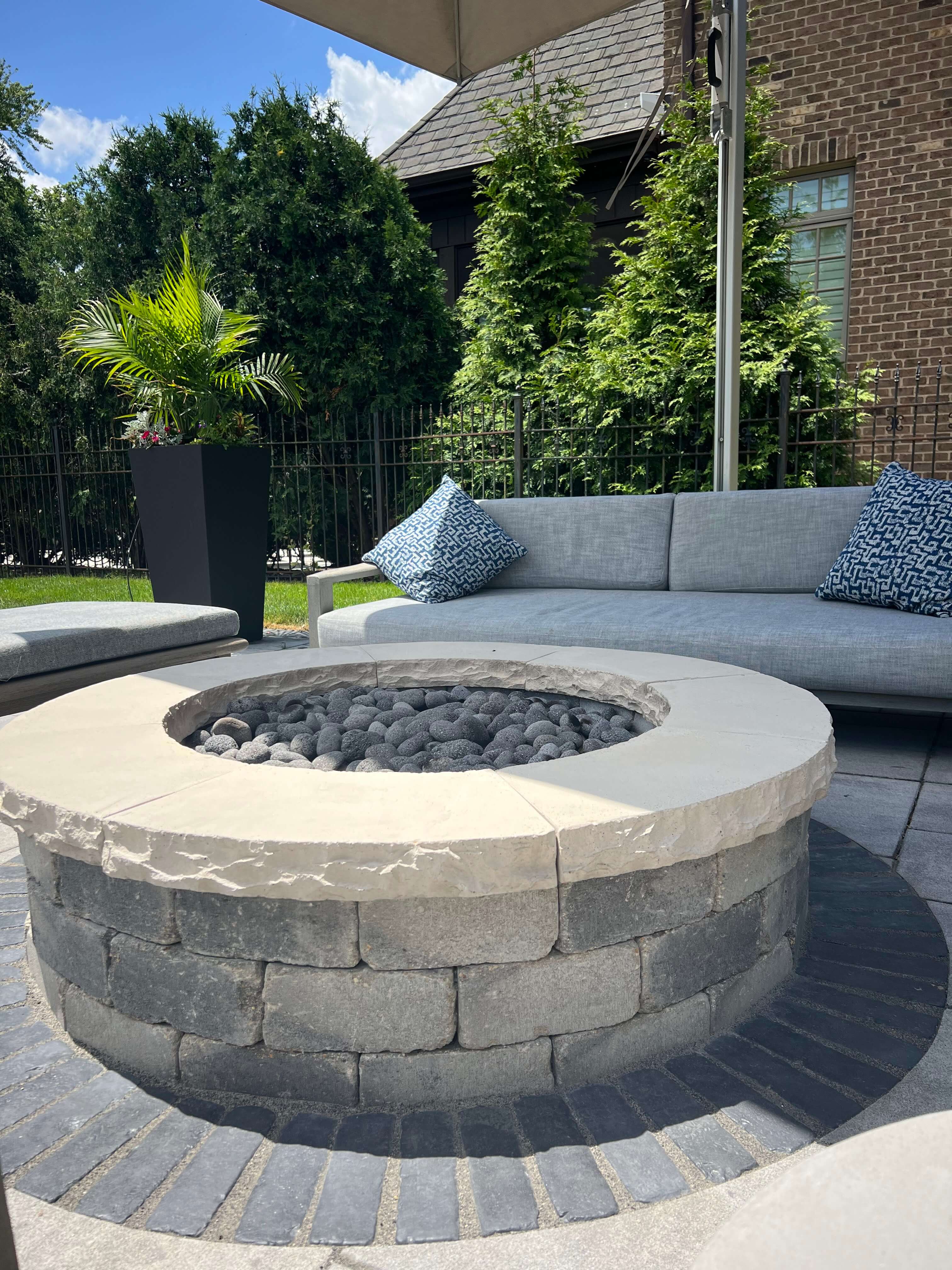

Patio & Landscape Design Ideas for Every Backyard
Whether you're starting with a blank yard or reimagining a patio that's never quite worked, good design ideas can turn an ordinary backyard into a space you actually want to spend time in. This guide walks through the layout decisions, material choices, and design features that shape a successful outdoor patio — along with answers to the questions homeowners ask most often when they start researching patio design for their own property.
What makes a good exterior patio design?
A good exterior patio design starts with how the space will actually be used, not with a photo you liked online. Before choosing materials or a layout, it helps to answer a few practical questions: Will this space mainly host quiet mornings for one or two people, or larger gatherings? Does it need shade for most of the day, or does the yard already provide natural cover? Is there a view worth building toward, or a less attractive area — like a utility box or a neighbor's fence line — worth screening out?
According to This Old House's guide to patio design, one of the simplest ways to strengthen a patio's design is to define its edges clearly — using a fence, hedge, or the home's own facade as a "wall," and a pergola, tree canopy, or umbrella as a "roof." Treating the patio as an actual outdoor room, rather than just a flat surface, is one of the biggest shifts that separates a design that feels intentional from one that feels like an afterthought.
How big should a patio be?
This is one of the most common questions homeowners have before starting a backyard transformation, and the honest answer is that it depends entirely on how the space will be used — but there is a useful rule of thumb. This Old House recommends allowing roughly 25 square feet per person for comfortable seating and movement space. A patio meant to seat six people for dinner needs meaningfully more room than a small two-chair reading nook, and it's easy to underestimate how much space furniture, walkways, and clearance around a grill or fire pit actually take up.
A larger patio offers more flexibility, but it also costs more and takes longer to install — so it's worth being honest about how the space will realistically be used most of the time, not just during the one big party a year.
Outdoor patio area ideas worth considering
Some of the most functional and visually appealing outdoor patio ideas come down to organizing the space into distinct "zones," much like rooms inside a house:
- A dining zone close to the kitchen door, to minimize how far food and drinks have to travel
- A lounge zone with comfortable seating, often anchored around a fire pit or fireplace
- A cooking zone, whether that's a simple grill station or a full outdoor kitchen
- A transition zone, like a paver walkway, that connects the patio to the rest of the yard
Not every patio needs all four zones — a smaller property might combine dining and lounge space into one area — but thinking in terms of "rooms" rather than one flat, undivided surface tends to produce a much more functional final layout.
What are the most popular outdoor patio designs right now?
Search trends and design publications both point to a few consistent favorites. Houzz's patio idea gallery shows a strong, ongoing preference for natural stone and concrete paver hardscaping, layered with landscape lighting, outdoor fireplaces, and covered structures like pergolas or roof extensions that let the space get used in more weather conditions, not just on the sunniest days.
A few specific features come up again and again in current outdoor patio designs:
- Fire features — whether a built-in fire pit or a full outdoor fireplace, these extend how late into the evening (and how far into fall) a patio actually gets used.
- Layered lighting — string lights, low-voltage landscape lighting, and built-in fixtures used together, rather than relying on one bright overhead light.
- Multi-material combinations — pairing pavers with natural stone accents, or a paver field with a contrasting border, rather than one single material throughout.
- Defined seating walls — low stone or paver walls that double as extra seating around a fire pit or garden bed.
Do patio pavers need a border?
Not strictly, but a border does more work than people expect. Beyond the visual benefit of clearly framing the patio's shape, a proper edge restraint keeps pavers from shifting or spreading apart over time — which matters even more in a climate with real freeze-thaw cycles. This is one of the reasons professionally installed brick paving tends to hold up better over the years than a DIY installation without proper base and edge preparation underneath.
How do I make a small backyard patio feel bigger?
A few design choices consistently help a smaller space feel more open:
- Keep the color palette simple. Too many contrasting materials in a small area can make it feel busy rather than cohesive.
- Use a single paver size or pattern rather than mixing several, which tends to visually shrink a space instead of expanding it.
- Add vertical elements, like a trellis or tall planters, to draw the eye upward instead of only across the ground.
- Leave a little breathing room around the edges rather than filling every square foot with furniture or planting beds.
What should I plan for before starting a patio project?
Before any excavation begins, it's worth thinking through a few practical details that are much easier to plan for upfront than to fix afterward:
- Drainage. Water needs somewhere to go. A patio built without proper grading can develop standing water or, worse, direct water toward the house's foundation.
- Sun and shade patterns. A space that gets pleasant morning sun might be uncomfortably hot by mid-afternoon — worth observing before committing to a layout.
- Utility lines. Underground utilities should always be marked before excavation starts.
- How it connects to the house. A patio that requires an awkward step down from the door, or that isn't aligned with an existing exit, will get used less than one with a smooth, natural transition.
This is exactly the kind of groundwork covered during a free on-site consultation — a good design plan accounts for the property's actual conditions, not just the finished look.
Bringing the ideas together
The best backyard patio designs rarely come from a single standout feature — they come from a handful of good decisions working together: a layout that matches how the space is really used, materials chosen for both appearance and durability, and details like lighting, fire features, and defined zones that make the space feel finished rather than incomplete.
If you're ready to move from browsing outdoor patio ideas to an actual plan for your own backyard, GoldLeaf Landscape offers custom patio design and installation for homeowners across Aurora, IL and the western suburbs, backed by 20+ years of experience and a 5-year workmanship warranty.
Protect Your Property This Winter
Contact GoldLeaf Landscape to build a snow removal plan for your property before the first storm hits.