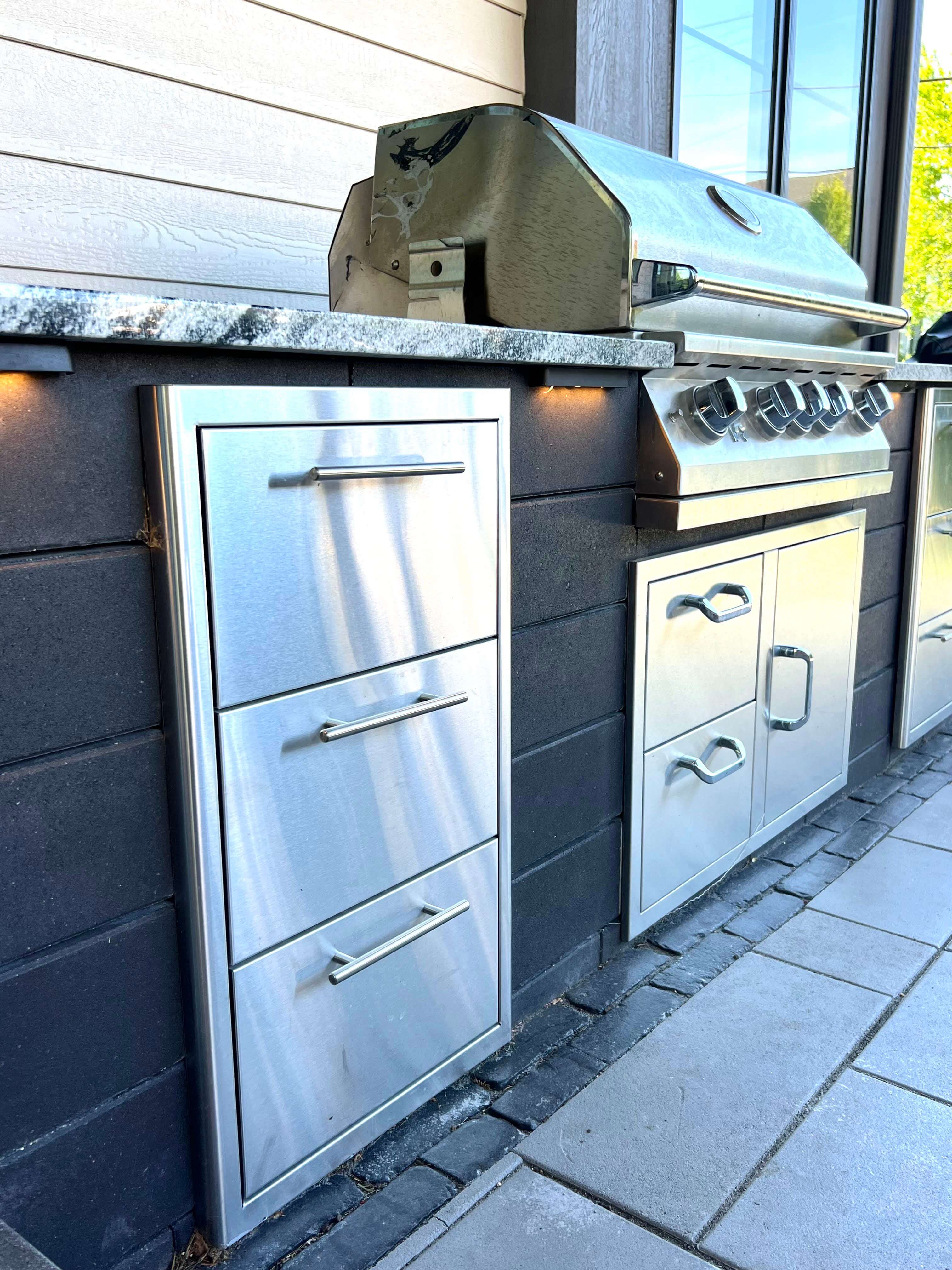

Patio Contractors in Elmhurst, IL: How to Choose and What to Expect
If you are searching for patio contractors in Elmhurst, IL, you have probably noticed how many companies offer the same thing on paper: a new patio, a fair price and a quick start. The difference shows up later, in whether the surface stays flat through Illinois winters, whether water drains away from your house, and whether the company answers the phone when something needs attention. This guide walks through how a good patio project works, what separates careful patio contractors from careless ones, and the questions worth asking before you sign anything.
GoldLeaf Landscape is a family-owned landscaping and hardscaping company based in Aurora, and we build paver patios for homeowners throughout the western suburbs, including Elmhurst. We wrote this guide to be useful whether you hire us or someone else. If you want to see how we approach the work, start with our patio installation service page or our Elmhurst landscaping page.
What patio contractors in Elmhurst actually do
A patio looks simple from the outside: a flat surface you can put furniture on. In practice, the visible surface is the smallest part of the job. Most of the work happens below grade, where you will never see it again once the pavers are in place. A thorough patio contractor will handle the following.
- Design and layout. Deciding the size, shape and location of the patio based on how you will use it, where the sun falls, how the house sits and where water naturally flows.
- Excavation. Removing sod and soil to the depth required for the base and the paver thickness.
- Base construction. Placing and compacting aggregate in layers so the patio does not settle.
- Drainage and slope. Setting the surface so water runs away from the foundation instead of toward it.
- Paver installation. Laying the pavers in the chosen pattern, cutting edges cleanly and keeping lines straight.
- Edge restraint and joint fill. Locking the perimeter in place and filling the joints so the surface stays tight.
- Cleanup and finish. Restoring the surrounding lawn or planting beds and hauling away the debris.
Any one of these steps can be done well or done badly, and the problems rarely show up on the first day. A patio built on a thin or poorly compacted base can look perfect in October and have low spots by the following spring.
Why the base matters more than the pavers
Homeowners often spend most of their time choosing the paver color and pattern, which makes sense because that is what you will see every day. But the base is what determines whether the patio lasts. The Interlocking Concrete Pavement Institute and the Concrete Masonry and Hardscapes Association publish technical guidance on this, and the consistent message is that a patio needs a properly compacted aggregate base, an appropriate bedding layer, and edge restraint to hold everything in place.
According to CMHA technical guidance for residential paver patios, a typical patio base is about four inches of compacted aggregate, while driveways need a thicker base of about six inches because of the vehicle loads. The guidance also calls for edge restraint around the perimeter, a minimum surface slope of about one and a half percent for drainage, and warns against using bedding sand to fill in low spots in the base, because sand cannot be compacted to the same stability as aggregate. It also advises against installing pavers over a frozen base.
Those details matter in the Chicago area for a simple reason: our soils hold moisture, and our winters freeze and thaw that moisture repeatedly. A base that is too thin, poorly compacted or installed over wet or frozen ground has more room to move. When you compare quotes from patio contractors, the base is the line item to understand, even though it is the one you will never see.
Paver patios versus other patio materials
Most of our patio work in the area uses concrete or clay brick pavers, so that is what this guide focuses on. It helps to know why.
Pavers
Pavers are individual units set over a compacted base. Because they are not a single rigid slab, they can flex slightly with the ground. If a section ever settles or a utility line needs access, individual pavers can be lifted and reset instead of breaking out a whole slab. They also come in a wide range of colors, textures and patterns, which makes it easier to match a home's brick, siding or roofline.
Poured concrete
A concrete slab can be a lower-cost option, but it is rigid. Slabs tend to crack as the ground moves, and repairs are usually visible. Color and texture options exist, though most homeowners who want an outdoor living space prefer the look of pavers.
Natural stone
Natural stone has a distinctive look and can be a beautiful choice, though it often costs more and can be less uniform to install. Some homeowners use stone for accents, steps or seating walls and pavers for the main surface.
If you are not sure which material fits your property and budget, a site visit is the best way to find out. We are happy to talk through the options on your brick paving or patio project.
Planning your Elmhurst patio
Before you call anyone, it helps to spend a little time thinking about how you actually want to use the space. A few questions will make every conversation with a contractor more productive.
- Who will use it? A patio for two people with morning coffee is a very different size than one for a family that hosts on weekends.
- What will go on it? A dining table, a grill, a fire feature and lounge chairs each need clear space around them. A common mistake is building a patio that looks big on paper and feels cramped once furniture is on it.
- Where does the sun go? Morning shade and afternoon sun change how comfortable a spot is in July.
- How will you get to it? Think about the route from the back door, the garage and the driveway. A good layout feels connected to the house.
- What is the view? Consider what you see from the patio and from inside the house looking out, including neighbors and utility boxes.
- What else do you want later? Walkways, steps, seating walls, planting beds and lighting are easier to plan together than to add one at a time.
Our guide to designing outdoor living spaces goes deeper on layout, zones and flow, and it is a good companion to this article. If you are thinking about the whole backyard, not just the patio, take a look at our backyard design service.
How drainage affects an Elmhurst patio
Water is the single biggest enemy of any hardscape. A patio should be built so that water runs off the surface and away from your foundation. That means setting the finished grade with a slight slope, not leaving it perfectly level, and thinking about where the runoff goes once it leaves the patio.
Your contractor should look at the existing grading around your house, notice where downspouts discharge, and think about whether the new patio will send water toward a neighbor, a window well or a low spot in the yard. If a drainage fix is needed, it is far easier to plan before the patio is built than after.
This is also one of the reasons a site visit matters. A company that quotes a patio without seeing the yard is guessing at the part of the job that carries the most risk.
Call 811 before any digging
Illinois law requires that anyone planning to dig contact JULIE, the state's one-call utility locating service, before the work begins. You can call 811 or (800) 892-0123, or submit a request at illinois1call.com. The service is free. A reputable patio contractor will make sure the locate request is made and that the utility marks are in place before any excavation starts. Do not assume this has been handled; ask.
Permits and local rules in Elmhurst
Whether a patio needs a permit, and what the setback and lot-coverage rules are, depends on the municipality and sometimes on the specific project. We have not verified the current requirements for the City of Elmhurst, and rules change, so contact the city's building or community development department to find out what applies to your property before work begins. If you live in an area with a homeowners association, check their rules as well.
A good contractor will be familiar with local requirements and will tell you plainly who is responsible for handling any permits. Put that responsibility in writing.
What to look for in patio contractors
When you are comparing companies, it is tempting to go straight to price. Price matters, but it is only meaningful when you are comparing the same scope of work. The National Association of Landscape Professionals offers guidance on hiring a landscape professional that emphasizes checking references, confirming insurance and getting a written proposal. We agree with all of that. Here is how we would apply it to a patio.
- A written, itemized proposal. It should describe the size of the patio, the material, the base depth, the edge restraint, the drainage plan and what happens to the removed soil.
- Proof of insurance. Ask for a certificate of insurance, and confirm it is current.
- References and photos of finished work. Look at projects that are a few years old, not only brand-new ones. You can browse our recent projects and read what customers say on our reviews page.
- A clear warranty. Ask what it covers, how long it lasts and what the process is for making a claim. Our workmanship warranty is five years, and we put the terms in writing.
- A realistic schedule. A company that promises to start tomorrow is either not busy or not careful. Good contractors have a waiting list in season.
- A written contract. Illinois has a Home Repair and Remodeling Act that sets requirements for written contracts on certain residential work, and the Illinois Attorney General publishes consumer guidance on it. Read that guidance before you sign anything.
Red flags to watch for
- A quote that arrives without a site visit.
- A price far below every other bid, with no explanation of what is different.
- Pressure to sign today to lock in a price.
- A request for a large payment up front.
- No mention of 811, drainage or base depth.
- Vague answers when you ask who will actually be on your property.
Questions to ask before you hire
- How deep is the compacted base, and how is it compacted?
- How will water drain off the finished patio?
- What edge restraint do you use, and how is it secured?
- Who calls JULIE, and when?
- Who is responsible for permits, if any are needed?
- What is the warranty, in writing?
- Who will be on site, and who supervises the crew?
- What is the payment schedule?
- How will you protect my lawn, driveway and landscaping during construction?
- What happens if I find a problem after the job is finished?
What the process looks like from start to finish
Every company runs its process a little differently, but a well-organized patio project generally follows these steps.
- Consultation. A conversation about how you want to use the space, followed by a visit to your property.
- Design and proposal. A layout and a written scope and price.
- Contract and scheduling. A written agreement, a start window and a payment schedule.
- Utility locates. A request to JULIE and confirmation that marks are in place.
- Excavation and base. Removing material, placing aggregate and compacting it in layers.
- Setting the pavers. Laying the pattern, cutting borders and installing edge restraint.
- Joint fill and compaction. Locking the surface together.
- Final walkthrough. Reviewing the finished work with you and cleaning up.
Adding to your patio: walls, steps and lighting
Many Elmhurst homeowners start with a patio and then realize they want more. A seating wall can add edge seating and define the space. Steps and a walkway can tie the patio to the rest of the yard. Lighting makes the space usable after dark and shows off the stonework. Planning these elements together saves money and avoids tearing into finished work later. Conduit, for example, is much easier to place before the pavers go down. Our article on landscape lighting ideas for patios, paths and backyards explains how lighting fits into a hardscape plan.
Do not forget the lawn around the patio
A new patio disturbs the ground around it, and the lawn next to it often needs repair or replacement when the work is done. If your yard needs a fresh start, sod gives you a finished lawn quickly, and fall is considered an ideal time to establish one in northern Illinois, according to the Illinois-Indiana Sea Grant program. We cover the process in detail in our guide to sod installation in Elmhurst, and you can read about our sod installation service as well.
Caring for your patio after it is built
Paver patios are low maintenance, not no maintenance. A little attention each year keeps them looking good.
- Sweep regularly. Debris holds moisture and encourages weeds.
- Rinse, do not blast. A garden hose handles most dirt. High-pressure washing can wash joint material out of the joints.
- Watch the joints. If joint material washes out, top it off so the surface stays locked together.
- Deal with weeds early. Pull them when they are small.
- Be careful with deicers in winter. Ask your installer which products are safe for your pavers and use them sparingly. Shovel early so ice does not bond to the surface.
- Keep drainage clear. Make sure gutters, downspouts and nearby drains are not sending water onto the patio.
- Reseal only if recommended. Some pavers benefit from sealing and others do not. Ask your installer for guidance specific to your product.
When is the best time to build a patio?
In northern Illinois, patios are typically built from spring through fall, when the ground is workable. Because pavers should not be installed over a frozen base, winter is generally not a time for patio installation. Good contractors book up early in the season, so if you want a patio ready for next summer, it is smart to start the design conversation in the winter or early spring. Starting early also leaves time for permits, if your project needs one.
Why homeowners choose GoldLeaf for their patios
We are a family-owned company, and we build every project with the expectation that we will stand behind it. We offer a five-year workmanship warranty, we take the time to plan drainage and base construction properly, and we like to talk through the whole backyard before we start, so the patio fits into a larger plan. You can learn more about our team, see our project gallery, or read answers to common questions on our FAQ page. For more on how we work with homeowners across the region, read our guide to choosing landscaping services near you.
Frequently asked questions about patio contractors in Elmhurst
How long does a patio installation take? It depends on the size and complexity of the patio, the weather and the amount of site preparation required. A straightforward patio can be completed in a matter of days, while a larger project with walls, steps or drainage work takes longer. Your contractor should give you a realistic schedule in writing.
Do I need a permit for a patio in Elmhurst? It depends on the size and design of the project and on local rules. Contact the City of Elmhurst to find out what applies to your property, and ask your contractor who will handle any required permit.
What is the difference between a paver patio and a concrete patio? A paver patio is made of individual units set over a compacted aggregate base, which lets the surface flex slightly and allows repairs to individual pavers. A concrete patio is a single rigid slab that can crack as the ground moves, and repairs are usually more visible.
How thick should the base be? Industry guidance from the Concrete Masonry and Hardscapes Association calls for about four inches of compacted aggregate for a typical residential patio, and about six inches for driveways. Your contractor should explain the base design for your site.
Can pavers be installed in the winter? Industry guidance advises against installing pavers over a frozen base, so most patio work takes place from spring through fall.
Do I need to call 811 myself? Illinois law requires that someone contact JULIE before digging. Many contractors make the request for you, but you should confirm who is responsible. The service is free.
How do I keep my patio from sinking? The most important factors are a properly compacted base, good drainage and edge restraint. Ask your contractor to explain each one before you sign a contract.
What warranty does GoldLeaf offer on patios? We offer a five-year workmanship warranty. We provide the terms in writing so you know exactly what is covered.
Ready to talk about your patio?
If you are planning a patio in Elmhurst, we would be glad to walk your property with you, talk through the options and put together a clear written proposal. Call us at 630-270-4324, send us a message, or learn more about our Elmhurst landscaping services.
Sources
- Concrete Masonry and Hardscapes Association, technical guidance for residential interlocking concrete pavement (PAV-TEC-002 and PAV-TEC-009)
- National Association of Landscape Professionals, Hiring a Pro (loveyourlandscape.org)
- Illinois Attorney General, Home Repair and Remodeling Act consumer guidance
- JULIE, Illinois one-call utility locating service: illinois1call.com
- Illinois-Indiana Sea Grant, Seed or Sod
Get a Free Consultation for Your Elmhurst Patio
Contact GoldLeaf Landscape to plan your paver patio in Elmhurst, IL.