
Batavia Landscape Lighting: Ideas for Patios, Paths and Backyards
Landscape lighting in Batavia, IL does two jobs at once. It makes a patio, walkway or backyard usable after dark, and it shows off the hardscape you invested in. A well-lit yard is safer to walk through, nicer to sit in and more welcoming when guests arrive in the evening. A poorly planned one is glary, uneven and full of dark spots.
This guide covers where lighting makes the biggest difference, how to plan it alongside a paver project, how to think about fixtures and layers of light, and what to ask before you hire anyone. It is written for homeowners who are early in the process and want to understand their options before they talk to a contractor.
GoldLeaf Landscape is a family-owned hardscape and landscaping company in Aurora that works with homeowners across the western suburbs, including Batavia. If you are planning a patio, walkway or backyard, see our Batavia service area page.
Why plan lighting with your hardscape
The cheapest time to run wiring is before the pavers go down. Conduit and cable can be placed under a patio or along a walkway while the base is open, instead of cutting or trenching through finished work later. Light fixtures can also be built into seating walls, steps and columns, and that is far easier during construction than afterward.
If you are already planning a patio, a walkway or a retaining wall, raise lighting in your very first consultation. Even if you do not install fixtures right away, your contractor can leave sleeves or conduit in place for later. See our patio installation and brick paving pages for the kinds of projects where this planning pays off.
The three layers of landscape light
Designers usually think about outdoor lighting in layers. Combining them gives a yard depth and keeps it from feeling like a parking lot.
Safety and path lighting
This is the low, practical layer. It marks steps, edges, walkways and changes in grade so no one trips. It does not need to be bright, only consistent. Evenly spaced low fixtures along a walk usually work better than a few bright ones.
Task and gathering lighting
This layer lights the places where people spend time: a dining table, a grill, a seating area. It should be warm and comfortable to sit in, and it should not shine into anyone's eyes. Fixtures built into a seating wall or placed beneath a pergola can do this without glare.
Accent lighting
Accent lights draw the eye to features: a specimen tree, a stone wall, a water feature, textured brick. The goal is to highlight a feature, not to flood it. Aim fixtures from the ground upward at an angle, and keep the light level modest so the feature looks natural at night.
Where to put lights
- Steps and grade changes. Safety comes first. Every step edge or riser should be visible.
- Walkways and driveways. Low path lights keep guests on the walk and make the front of the house welcoming.
- Patio seating and dining areas. Soft, warm light you can sit in beats a single bright floodlight on the back of the house.
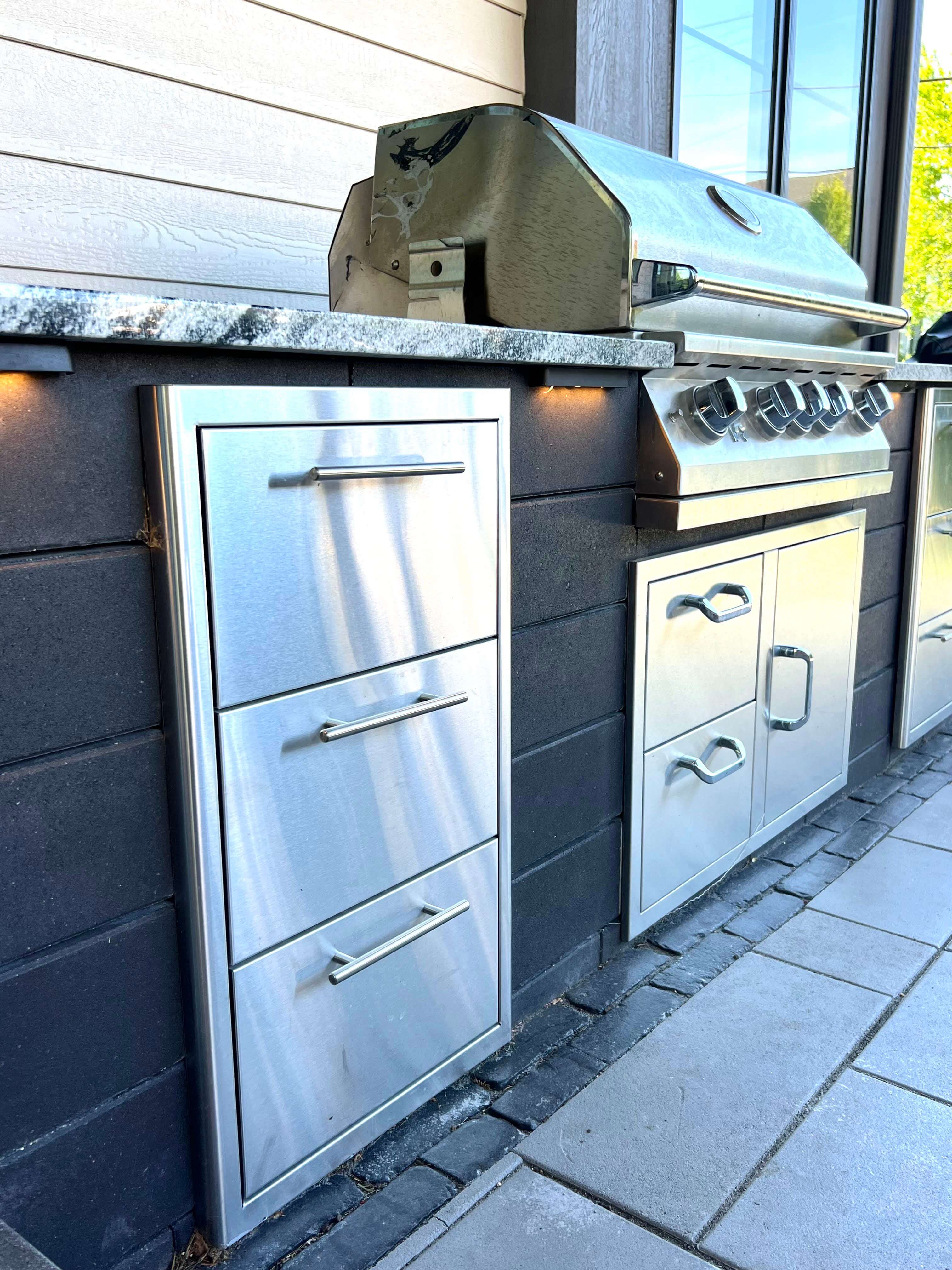
- Seating walls and planter columns. Light built into the wall adds depth without glare.
- Trees and key plantings. Uplighting a mature tree gives the yard height and shape.
- Entry and door areas. A well-lit entry is both welcoming and a deterrent to trouble.
- Outdoor kitchens and grills. Cooking at night is much easier with focused light where you work.
Choosing the color and brightness
Warm white light, which has a soft, yellowish tone, flatters brick, stone, wood and plants. Cooler, bluish light tends to make hardscape look harsh and can make a yard feel like a commercial lot. Many homeowners prefer warm white fixtures throughout so the whole yard has a consistent feel.
More light is not better. Landscape lighting works because of contrast between lit and unlit areas. If everything is bright, nothing stands out and the glare hurts your night vision. Start with fewer fixtures than you think you need, and add more once you see the effect.
Fixture types and where they fit
- Path lights. Short fixtures along walks and beds that throw light downward and outward.
- Uplights or spotlights. Ground-mounted fixtures that aim up at trees, walls or columns.
- Wall washers. Fixtures that spread a wide, soft light across a wall or fence.
- Step lights. Small fixtures recessed into risers or the underside of a tread or cap.
- Hardscape or wall-cap lights. Slim fixtures that fit into a seating wall or retaining wall.
- Downlights. Fixtures mounted high, in a tree or on a structure, that cast a soft glow over a patio or yard from above.
- String and decorative lights. Good for a casual feel over a patio, but they are a different category from permanent landscape fixtures.
Low-voltage, line-voltage and solar: what is the difference?
Most residential landscape lighting is low-voltage, which means a transformer reduces household current to a lower voltage and a cable carries it to the fixtures. Low-voltage systems are popular because the fixtures are small, the cable can be run in shallow trenches and the systems are flexible to adjust. Line-voltage systems operate at full household voltage and are usually used for larger fixtures or particular installations, and the wiring for them is more regulated. Solar fixtures need no wiring, but they depend on sunlight and tend to be dimmer and less consistent, which is why they are more often used for small accents than for primary lighting.
Electrical rules vary, and some work may need a licensed electrician or a permit. Do not assume low-voltage work is exempt from local requirements. See the section on Batavia rules below.
Planning tips that make a real difference
- Walk the yard at night first. Stand where you will sit and see what you actually look at. Note dark spots and glare from neighbors.
- Choose warm white light. It flatters stone, brick and plants.
- Layer the light. Use low light for safety, mid-level light for seating and accent light for features.
- Avoid aiming fixtures at windows or neighbors. Glare is annoying inside and out.
- Use a timer or photocell. The system runs on its own and you do not have to remember it.
- Mark the fixture plan on your hardscape design. Locate fixtures, wire runs and the transformer before construction.
- Plan for growth. Plants get bigger. A fixture that highlights a small shrub today may be buried in leaves in three years.
- Leave room to expand. Choose a transformer with spare capacity if you may add fixtures later.
Lighting by project type
Patios
Combine soft light around the edge or in the seating wall with a modest overhead source if you have a structure. Keep the dining area comfortable and avoid bright light directly in people's eyes. Our article on choosing patio contractors explains how patios are built, which helps you plan where conduit and fixtures will go.
Walkways and driveways
Use low, evenly spaced fixtures. Light the ends and turns more than the straight stretches, so the route is clear. Check that fixtures near a driveway edge will not be hit by vehicles or snow removal equipment.
Steps
Light every step. Built-in step lights are cleaner than fixtures placed at the side, and they put light on the surface where people need it.
Retaining and seating walls
Small fixtures built into the wall cap or underneath the cap give a soft glow that outlines the wall without glare. The wiring needs to be placed during construction, so decide early.
Trees and gardens
Uplight a few key trees or plants instead of lighting everything. Fewer, well-placed fixtures look better than a yard full of spots.
Check before you dig
Before any digging for lighting or anything else, Illinois law requires contacting JULIE, the state's one-call utility locating service. Call 811 or (800) 892-0123, or visit illinois1call.com. The service is free. Cable trenches are shallow, but they can still reach buried lines. Ask your contractor to confirm that locates are done before work begins.
Batavia permits and electrical rules
Electrical work and permit requirements vary by municipality, and we have not verified the current requirements for Batavia. Contact the City of Batavia to find out what applies to your property before work begins. If your system includes line-voltage wiring, ask who will perform the work and whether that person is licensed. If you live in an area with a homeowners association, check their rules on exterior lighting as well.
Combining lighting with the rest of the backyard
Lighting works best as part of a whole-yard plan. Our backyard design service looks at patios, walkways, lawn, planting and lighting together, and our article on designing outdoor living spaces covers the zones and flow that determine where light is needed. If you are building a new lawn at the same time, read our guide to sod installation, and plan wire routes before the sod goes down. For a look at how we approach landscaping and hardscaping in the area, see our article on landscaping and hardscaping in Batavia.
Maintaining landscape lighting
- Clean the lenses. Dirt, spider webs and mineral deposits dim the light.
- Trim plants away from fixtures. Growth blocks light and can trap heat.
- Check fixture aim each season. Frost heave and lawn work can knock them out of position.
- Inspect connections and cable. Look for damage after digging, aerating or winter.
- Reset the timer. Daylight changes through the year, and so do your evening habits.
- Plan for winter. Snow piles and plow edges can damage fixtures near driveways and walks.
Questions to ask a lighting contractor
- Who handles any line-voltage electrical work, and is that person licensed?
- Can you show me a lighting plan before installation?
- What brand and type of fixtures do you use, and are replacement parts available?
- How will the wiring be buried and protected?
- What does the warranty cover, in writing?
- Who calls 811, and when?
- Can I come see a finished system at night?
- How will the system be controlled?
The National Association of Landscape Professionals also publishes guidance on hiring a landscape professional. It recommends checking references, confirming insurance and getting a written proposal, and all of that applies to lighting projects. Illinois has a Home Repair and Remodeling Act that sets contract requirements for certain home work, and the Illinois Attorney General publishes consumer guidance on it. Read it before you sign.
Frequently asked questions about Batavia landscape lighting
How much does landscape lighting cost in Batavia? It depends on the number of fixtures, the length of wire runs and the type of fixture. Ask for a written scope with fixture counts so quotes can be compared.
Can I add lighting to an existing patio? Often yes, but wiring is easier when it is planned before the patio is built.
Should lighting be planned with a new patio? Yes. Running conduit while the base is open avoids cutting into finished work.
Do I need to call 811 first? Yes, before any digging. It is free.
What color of light looks best on pavers? Warm white light usually flatters brick, stone and plants better than cool white light.
Do I need a permit for landscape lighting in Batavia? Requirements vary, so contact the City of Batavia to find out what applies to your property.
How many fixtures do I need? It depends on the size and layout of your yard. Start with the areas that matter most, such as steps, walkways and seating, and add accent lighting after you see how the space looks at night.
Are solar lights a good option? Solar fixtures need no wiring, but they depend on sunlight and tend to be dimmer, so they are better suited to small accents than to primary lighting.
Planning a patio, walkway or backyard in Batavia?
Call GoldLeaf at 630-270-4324 for a free consultation, send us a message, or read more about our Batavia service area.
Sources
- JULIE, Illinois one-call utility locating service: illinois1call.com
- National Association of Landscape Professionals, Hiring a Pro (loveyourlandscape.org)
- Illinois Attorney General, Home Repair and Remodeling Act consumer guidance
Get a Free Consultation for Your Batavia Project
Contact GoldLeaf Landscape to plan your patio, walkway or backyard in Batavia, IL.