
Landscaping & Hardscaping Design in Batavia, IL
Batavia's mix of historic Fox River-adjacent homes and newer residential streets means landscaping projects here often need to account for very different site conditions depending on where a property sits in the city. Whether you're near the river corridor or further from downtown, here's what's worth knowing before starting a landscaping project in Batavia: how design works, why base preparation matters, what to confirm with the city, and how to time your project.
Why older Batavia properties need different planning than newer ones
Homes near Batavia's historic areas and the Fox River often have mature trees, established landscaping and more complex grading than newer developments elsewhere in the city. A landscaping design plan for one of these properties needs to work around existing root systems and drainage patterns rather than treating the lot as a blank slate.
On older lots, a good design plan will typically:
- Protect mature trees. Excavating for a patio or wall too close to a large tree can damage roots and shorten the tree's life, so layouts are adjusted around them.
- Respect existing grade and drainage. Older yards often have established flow paths that a new hard surface can disrupt if not planned for.
- Match the home's character. Material and color choices should complement an older home's architecture rather than clash with it.
- Account for tighter access. Narrower side yards and established fences may limit where equipment can go, which affects how a project is built.
Newer Batavia developments present the opposite challenge: open, often compacted soil, little shade and a blank slate that benefits from a full plan, with structure plants, shade trees and defined outdoor rooms, before any construction starts.
Hardscaping that holds up over time
Brick paving and retaining wall construction depend heavily on proper base preparation. This is especially true in Batavia, where river-adjacent soil conditions can differ from drier, more elevated parts of the city. A retaining wall or patio installed without accounting for local soil and moisture conditions is more likely to settle unevenly over time.
Industry guidance is specific. The Concrete Masonry & Hardscapes Association's guide specification for interlocking concrete pavers recommends compacting the subgrade and aggregate base to 98% standard Proctor density for pedestrian areas and residential driveways. It notes that installers cannot correct base deficiencies by adding sand, because the base sets the final paver elevations, and that pavers and sand shouldn't be placed over a frozen base or during heavy rain or snow.
What this means for you: the quality of a hardscape is determined mostly by work you won't see once it's finished. When comparing Batavia contractors, ask how deep they excavate, how they compact the base, how they set edge restraints and how they handle water.
Pavers, concrete or natural stone?
Most Batavia homeowners compare three surface options:
- Brick and concrete pavers: Individual units flex with the ground and can be lifted and re-set if a section settles, and they come in many colors and patterns. They need a properly built base, and the joints need occasional sand top-ups.
- Poured concrete: It costs less upfront for a basic slab. It cracks as the ground moves, is hard to repair invisibly and offers limited design options.
- Natural stone: It has a distinctive, high-end look. Material costs are higher, and surface texture and porosity vary by stone.
For most patios, walkways and driveways we build, interlocking pavers offer the best balance of appearance, repairability and longevity.
Retaining walls and grade changes
Retaining walls make level, usable space from sloped ground, direct water and can double as seating or planters. Because they hold back soil and water, they need engineered drainage behind them: compacted base, drainage aggregate and a path for water to exit. Near the river or in low areas, drainage planning is even more important.
What's involved in a backyard transformation?
A full backyard transformation combines hardscaping, patio construction and often sod installation into a single coordinated project. For Batavia homeowners weighing whether to tackle a yard in phases or all at once, planning the full vision up front, even if construction happens in stages, tends to produce a much more cohesive final result.
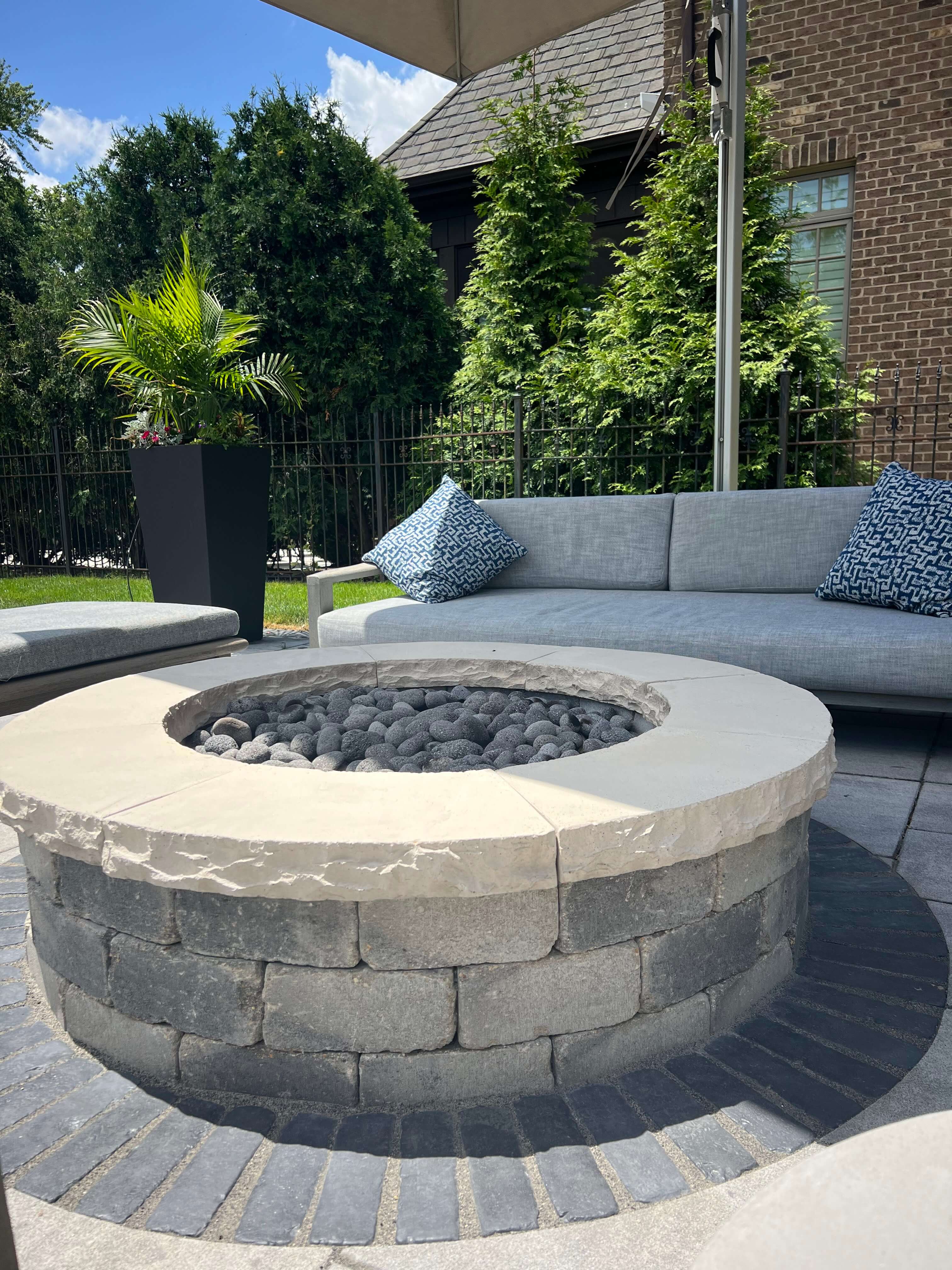
Popular elements include paver patios, fire pits and fire tables, outdoor kitchens, seat walls, walkways, planting beds and new sod. Installing sod last gives the yard a finished look and repairs lawn disturbed during construction.
Drainage and the Fox River corridor
Every hard surface sheds water instead of absorbing it, so a new patio or walkway needs a deliberate path for runoff: slope away from the house, a route across the yard and a place for water to go that doesn't affect a neighbor's property. In river-adjacent or low-lying parts of Batavia, soil can stay wetter and runoff can be a bigger factor.
Common solutions include properly sloped patio surfaces, swales, catch basins, drain tile and planting beds sized to absorb runoff. If your yard already holds water after storms, address that during design. It's much cheaper to build the solution into a new hardscape than to retrofit it.
On projects that disturb a significant amount of ground or involve floodplain, floodway or wetland areas, stormwater and floodplain rules can come into play. Kane County's stormwater permit application tracks land-cover change and impervious area and asks whether the site contains floodplain, floodway or wetlands. The form doesn't say how it applies inside individual municipalities, so confirm with the City of Batavia and Kane County Water Resources if your property is near the river.
Choosing plants for Batavia yards
Choose plants for your actual conditions (sun, soil, moisture and exposure), not just looks. Wet or low spots near the river favor plants that tolerate moisture; compacted clay soils and road-salt exposure near driveways call for tougher selections.
The Morton Arboretum's plant search is a free tool that lets you filter trees, shrubs, perennials and grasses by USDA hardiness zone, mature size, light exposure and soil type, and by tolerance of clay soil, road salt, drought and wet sites. Its curated lists (Midwest natives, shade-tolerant shrubs, plants for wet sites) are good starting points.
Our planting principles: use evergreen or structural shrubs for winter form, layer bloom times across the seasons, plan for mature size and use mulch or stone edging to cut weeding and hold moisture.
Permits and utility locates in Batavia
City permits. The City of Batavia's Community & Economic Development department handles building permits at (630) 454-2700 (100 N. Island Avenue, Monday–Friday, 8 AM–5 PM). Requirements for patios, fences, retaining walls and drainage depend on the specifics of your project, so call before you finalize a design. If your home is in or near a historic area, ask whether any exterior review applies. A good contractor will help you confirm what's needed and who pulls the permit.
HOA review. If your neighborhood has an HOA, check its architectural review process before finalizing materials, colors and layout.
Utility locates. Illinois law requires underground utilities to be marked before digging. JULIE (811) provides this as a free service and takes requests online or by phone at any time. Confirm that the locate request is part of your contractor's scope.
How far in advance should I plan a Batavia hardscape project?
Spring and early fall are generally the busiest seasons for hardscape work in this region, once the ground has thawed and before the first hard freeze. Base and bedding materials shouldn't be placed over frozen ground, which is why installations cluster in warmer months. Booking a consultation in late winter is often the best way to secure a spring installation date before the season fills up. Design and planning can happen any time of year, so starting early costs you nothing.
What affects the cost of a Batavia project?
We don't publish one-size-fits-all pricing because every property is different. The factors that move the number most:
- Size and complexity (curves, multiple levels and inset features add cost)
- Site conditions such as slopes, drainage needs, tree roots and access
- Materials including paver style, wall block and edging
- Features like fire tables, outdoor kitchens, lighting and water features
- Scope, since combining patio, walls, plantings and sod is often more efficient than phasing
A site visit is the only reliable way to price a project accurately.
Choosing a Batavia landscaping company
Ask any contractor you're considering:
- How do you prepare the base and handle drainage on my lot?
- Who pulls permits and calls JULIE?
- Can I see finished projects in Batavia or nearby towns? (See our projects and reviews.)
- What does your workmanship warranty cover, and is it in writing? (Ours is 5 years on every hardscape project.)
- Do you carry insurance, and can you provide references?
Learn more about how we work on our about page or FAQ.
Serving Batavia and nearby communities
We're based in Aurora and serve Batavia and neighboring Fox Valley communities. You may also find these local pages helpful: North Aurora, St. Charles, Montgomery and Aurora. See every community on our areas we serve page. Related reading: our guides for St. Charles and Naperville, and the rest of our blog. For HOAs and commercial properties, see our commercial landscaping services.
Frequently asked questions
Why do older Batavia properties need different landscaping planning than newer ones? Homes near Batavia's historic areas and the Fox River often have mature trees, established landscaping and more complex grading than newer developments, requiring design plans that work around existing root systems and drainage patterns.
How far in advance should I plan a Batavia hardscape project? Spring and early fall are generally the busiest and best seasons for hardscape work in this region. Booking a consultation in late winter is often the best way to secure a spring installation date.
Are pavers better than poured concrete? For most residential projects, we recommend pavers because individual units can be re-set if a section settles and they offer far more design flexibility. Either material depends on a properly compacted base to last.
Do I need a permit for a patio in Batavia? Requirements depend on your project, so confirm with the City of Batavia's Community & Economic Development department at (630) 454-2700 before you build.
Do you offer free estimates in Batavia? Yes. We offer free on-site consultations for Batavia properties.
Getting started
GoldLeaf Landscape offers free on-site consultations for Batavia properties, backed by a 5-year workmanship warranty. Call 630-270-4324 or request your free consultation to start planning.
Get Your Free Estimate Today for your project in batavia, IL
Contact GoldLeaf Landscape for your properties luxury outdoor living project.