
Brick Paver Patios Design & Maintenance in North Aurora:
Brick paver patios are a practical way to turn a plain backyard into a more comfortable, usable, and attractive part of the home. For homeowners in North Aurora, they offer a strong blend of durability, design flexibility, and everyday function, especially when planned around the way your family relaxes, entertains, and moves through the yard. This guide explains the key benefits, smart patio design ideas, and what to know about brick paver installation and long-term care.
Why are brick paver patios a smart choice for North Aurora homes?
Brick paver patios are a smart choice because they create stable, attractive outdoor living spaces that can handle regular use while still offering plenty of room for custom design. Unlike a single poured surface, individual pavers can flex slightly with seasonal ground movement and can often be repaired in sections if needed. For North Aurora homeowners, that balance of beauty, function, and maintainability makes pavers a dependable option for patios, walkways, seating areas, and backyard gathering spaces.
A well-designed patio can also make your yard feel more intentional. Instead of having a grill on the grass, chairs on uneven ground, or a disconnected fire pit area, pavers give those activities a defined place. That structure helps the backyard feel less like unused space and more like an extension of the home.
When people search for brick paver patios North Aurora, they are often looking for more than a surface upgrade. They want a patio that fits the property, complements the home’s exterior, and improves how the yard works throughout the year.
Pavers add character without limiting your design
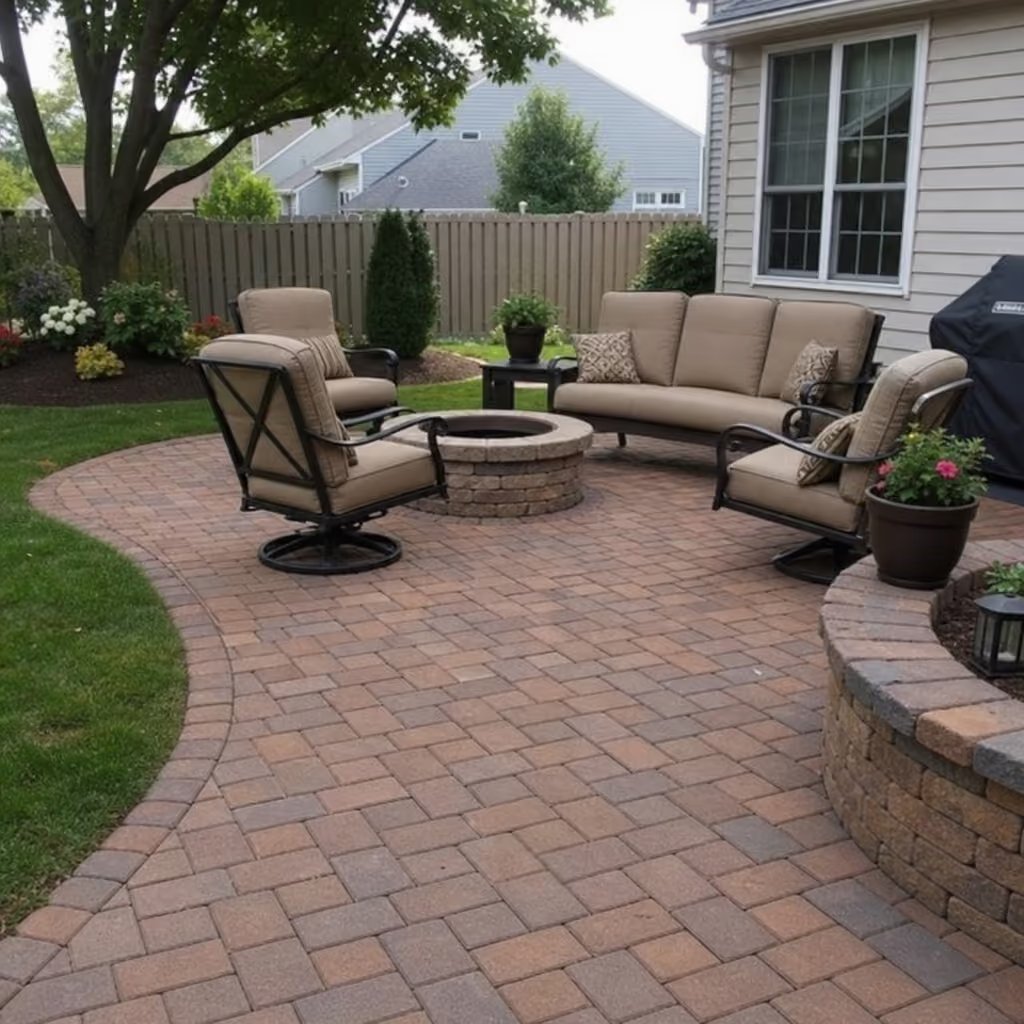
One of the biggest benefits of brick pavers is the range of looks they can create. A patio can feel classic and traditional, clean and modern, rustic and relaxed, or warm and cottage-inspired depending on the paver shape, color blend, border, and laying pattern. That makes pavers useful for many styles of North Aurora landscaping, from compact yards to larger properties with multiple outdoor zones.
Good design starts with the home itself. The patio should feel connected to the architecture, siding, trim, deck, fence, or landscape beds nearby. A soft earth-tone paver may look natural beside mature trees and garden beds, while a more defined border can help frame a patio near a newer home with crisp exterior lines.
Useful patio design ideas include:
- A dining patio near the kitchen: This layout makes outdoor meals easier and keeps serving trips short.
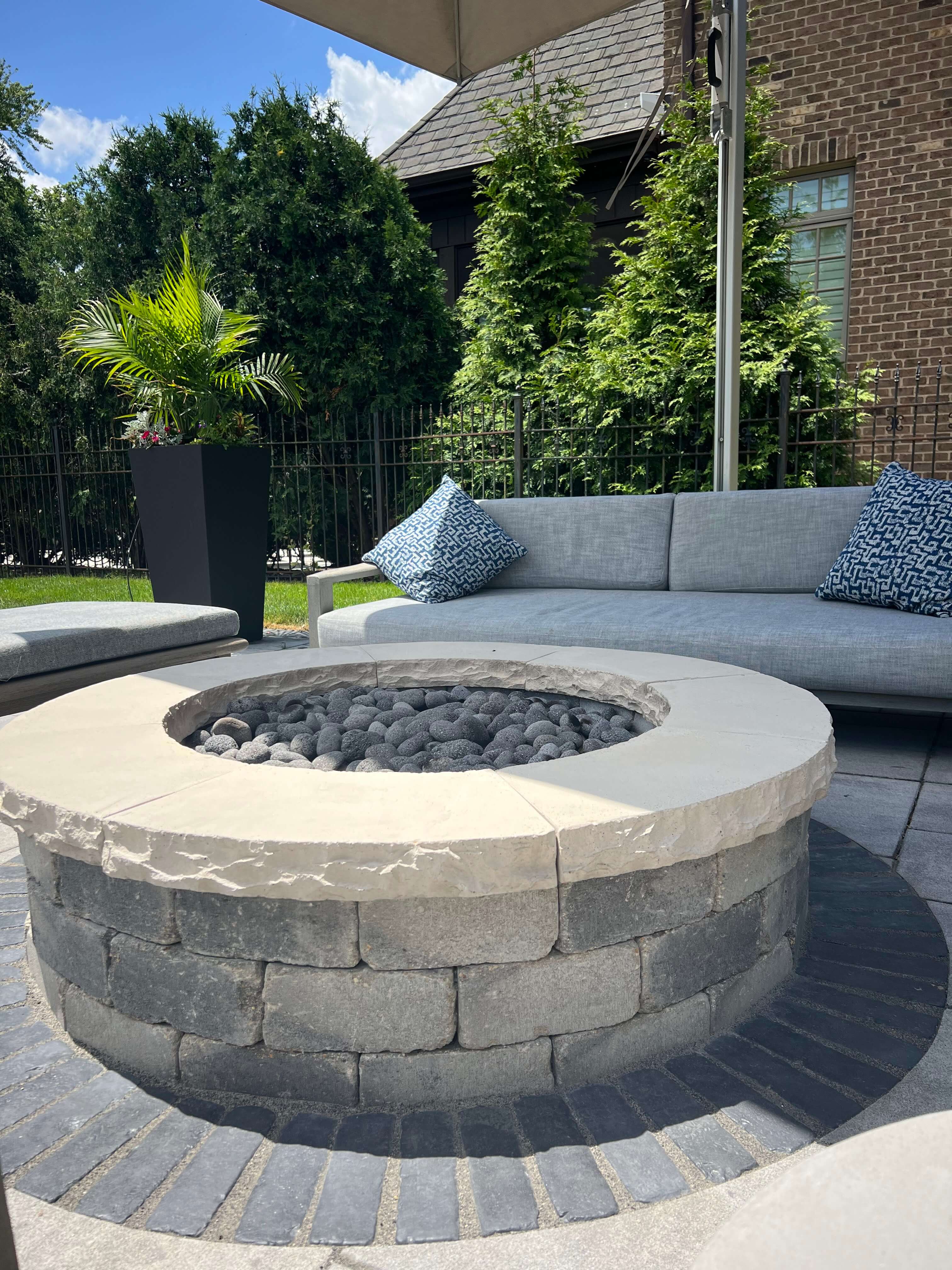
- A lounge area with a fire feature: Seating can be arranged around a central focal point for evening use.
- A curved patio edge: Curves can soften the yard and blend naturally into planting beds.
- A contrasting border: Borders define the patio shape and can make even a simple layout feel finished.
- Connected walkways: Paver paths can link the patio to a driveway, side yard, garden, or detached garage.
- Multi-zone layouts: Larger yards can include separate areas for cooking, dining, and relaxing.
The goal is not to choose the most complicated design. The best custom paver patios are the ones that match how the space will actually be used.
Outdoor living spaces make everyday life easier
A patio does not have to be reserved for parties or special occasions. The right layout can support everyday routines, from morning coffee to weeknight grilling to quiet evenings outside. By creating a firm, level surface, pavers make it easier to use outdoor furniture, move around safely, and keep the backyard organized.
Outdoor living spaces also help define boundaries. A seating area feels more inviting when it has a clear floor beneath it. A grill station works better when it has room for prep, traffic flow, and nearby dining. Even a small patio can make a backyard feel more complete when it is placed where people naturally want to gather.
For families, a paver patio can become a flexible zone that changes with the season. It might hold a dining set in summer, a fire pit in fall, and planters or container gardens in spring. Because pavers come in many shapes and patterns, the patio can be designed to feel polished without becoming too formal for real-life use.
What should you consider before brick paver installation?
Before brick paver installation, consider the patio’s purpose, size, location, drainage, traffic flow, and connection to the rest of the landscape. A patio that looks good on paper can become frustrating if it is too small for furniture, too far from the kitchen, or placed where water naturally collects. Planning these details early helps create a patio that is easier to use and easier to maintain.
Start by thinking about the main activity. A dining patio needs enough room for chairs to pull back comfortably. A fire pit area needs space around the seating zone. A walkway needs to feel natural, not like an afterthought. These practical details shape the final design as much as color or pattern.
Important planning questions include:
- How many people will usually use the patio? Design for daily life first, then occasional entertaining.
- Where does the sun hit the yard? Afternoon sun, shade patterns, and wind exposure can affect comfort.
- How will water move through the area? Proper grading helps reduce puddling and protects nearby structures.
- What furniture or features will be included? Dining sets, grills, pergolas, planters, and fire features all need space.
- How does the patio connect to doors, paths, and lawn areas? Smooth transitions make the space feel natural.
Professional hardscaping services can be especially helpful during this stage. Installation is not just about placing pavers; it involves excavation, base preparation, edge restraint, leveling, pattern layout, and finishing. When those steps are handled carefully, the patio is more likely to stay attractive and functional over time.
Brick patios offer practical durability
Pavers are popular because they combine strength with flexibility. In a climate with seasonal temperature changes, outdoor surfaces need to tolerate expansion, contraction, moisture, and regular foot traffic. Individual pavers can respond to subtle ground movement better than some rigid surfaces, which is one reason they are commonly used for patios and walkways.
Another practical advantage is repairability. If a small area becomes stained, settled, or damaged, individual pavers can often be lifted and addressed without replacing the entire patio. That does not mean a patio is maintenance-free, but it does mean the surface is designed in a way that supports long-term care.
Pavers also create a finished look that pairs well with other landscaping features. They can frame planting beds, connect to retaining walls, or transition into natural stone, mulch, or lawn. This makes them a flexible choice for homeowners who may want to improve the yard in phases rather than complete every project at once.
Brick patio maintenance is straightforward with the right habits
Brick patio maintenance is usually manageable when homeowners keep up with simple seasonal habits. Sweeping, rinsing, removing organic debris, and addressing weeds early can help the surface stay cleaner and more comfortable to use. The key is consistency, because small issues are easier to manage before they spread across the patio.
A basic care routine may include:
- Sweep regularly: Leaves, dirt, and seeds can collect in joints and corners.
- Rinse as needed: A garden hose can remove light surface debris before it settles in.
- Treat stains promptly: Food, grease, rust, and plant stains are easier to address when caught early.
- Watch the joints: Joint material helps lock pavers together and discourage weeds.
- Check edges and low spots: Early attention can prevent small movement from becoming more noticeable.
- Refresh when appropriate: Depending on the patio and conditions, joints or surface appearance may need periodic attention.
Avoid assuming that stronger cleaning is always better. Harsh methods can disturb joint material or affect the finish of some pavers. When in doubt, use the gentlest effective approach or ask a hardscaping professional what is appropriate for the specific paver type.
Custom paver patios can improve the whole landscape plan
A patio works best when it is designed as part of the larger yard, not as an isolated square of hardscape. The surrounding landscape can make the patio feel cooler, softer, more private, and more inviting. Planting beds, low walls, lighting, steps, and walkways can all support the patio’s function while improving the overall look of the property.
For example, a patio near the back door may benefit from a short walkway to the side yard. A sunny seating area may feel more comfortable with ornamental grasses or shrubs nearby. A larger patio may need planting beds to break up the edges and prevent the space from feeling too hard or exposed.
This is where north aurora landscaping and hardscaping services often overlap. The pavers create the structure, while the landscape adds texture, color, shade, and seasonal interest. When both are planned together, the result feels more natural and complete.
Small design choices make a big difference
The details of a paver patio can shape how polished and functional it feels. Color is important, but it should not be the only decision. Pattern, scale, border style, joint lines, patio shape, and transitions all affect the finished result.
Homeowners often benefit from keeping the main field of the patio simple and using borders or accents for personality. This approach helps the patio age well visually and makes it easier to coordinate with future landscape updates. It also prevents the design from feeling too busy once furniture, planters, cushions, and lighting are added.
Consider these finishing touches:
- A border that clearly defines the patio edge
- Step details that improve transitions from doors or decks
- Low-voltage lighting along walkways or seating areas
- Planter pockets near corners or curves
- Seat walls for extra gathering space
- A dedicated grill zone away from main foot traffic
These features do not need to be elaborate. Often, the best patio feels simple at first glance but works well because every detail has a purpose.
The best patios are built around real use
A beautiful patio should still be practical. Before choosing a layout, picture a normal day in the space. Where will people enter? Where will the grill smoke go? Will chairs block a doorway? Is there enough room to walk around the table? These questions help prevent design choices that look appealing but feel awkward later.
It is also helpful to think about future plans. If you may add a pergola, outdoor kitchen, hot tub, or expanded garden bed later, mention that during the design phase. Even if those upgrades are not included right away, the patio can often be planned to support future improvements more gracefully.
For many homeowners, the real value of a paver patio is not one single feature. It is the combination of a better-looking yard, more usable space, easier entertaining, and a stronger connection between the indoors and outdoors.
A well-planned paver patio is a lasting backyard upgrade
Brick paver patios give North Aurora homeowners a practical and attractive way to enjoy more of their property. They support outdoor dining, relaxing, entertaining, and everyday routines while offering design flexibility that can fit many home styles. With thoughtful planning, careful installation, and simple maintenance, a paver patio can become one of the most useful spaces around the home.
If you are exploring custom paver patios, start with how you want the space to feel and function. From there, the right design, materials, and hardscaping services can help turn a basic backyard into an outdoor area that feels comfortable, connected, and built for real life.
Discuss your outdoor living project
Turn the ideas on this page into a finished space built for years of use.